Climate Change
The climate crisis is a global emergency that is fueling humanitarian needs across the board. UNICEF's response is focused on children: protecting them from climate hazards, building more climate-resilient social services, empowering young people as agents of change and more. Learn how UNICEF works with partners toward a safer and sustainable future.
Updated June 18, 2026
The climate crisis is a child rights crisis
All children have the right to a safe and clean environment. Yet more than 1 billion children remain at extremely high risk from climate and environmental shocks.
Almost all children are now exposed to at least one climate hazard, be it riverine or coastal flooding, drought, tropical storms, heat waves or extreme heat, fires or sand and dust storms. The impact on children’s physical and mental health and well-being — and their access to education and protection — is huge.
UNICEF's 2026 Children's Climate Risk Report reveals exactly where, and how intensely, these multiple and overlapping climate threats are endangering children, undercutting the social services they rely on — and what governments should do to develop practical and effective solutions for adaptation and disaster risk reduction.
Children are not little adults; their bodies and minds are uniquely vulnerable to pollution, deadly diseases and extreme weather. Children are more likely than adults to suffer the effects of air pollution — a factor not primarily driven by Earth’s climate but that is highly sensitive to and compounded by it — because they breathe faster, taking in more toxic air.
Because infants and young children are less able to regulate their body temperatures and can more easily become dehydrated, they face higher risks to their health and well-being during a heat wave.
Learn more about how climate change threatens children's health
Children are growing up in a world that is far more dangerous because of climate change and environmental degradation
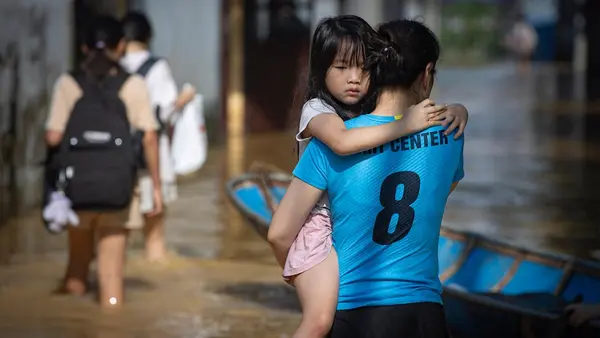
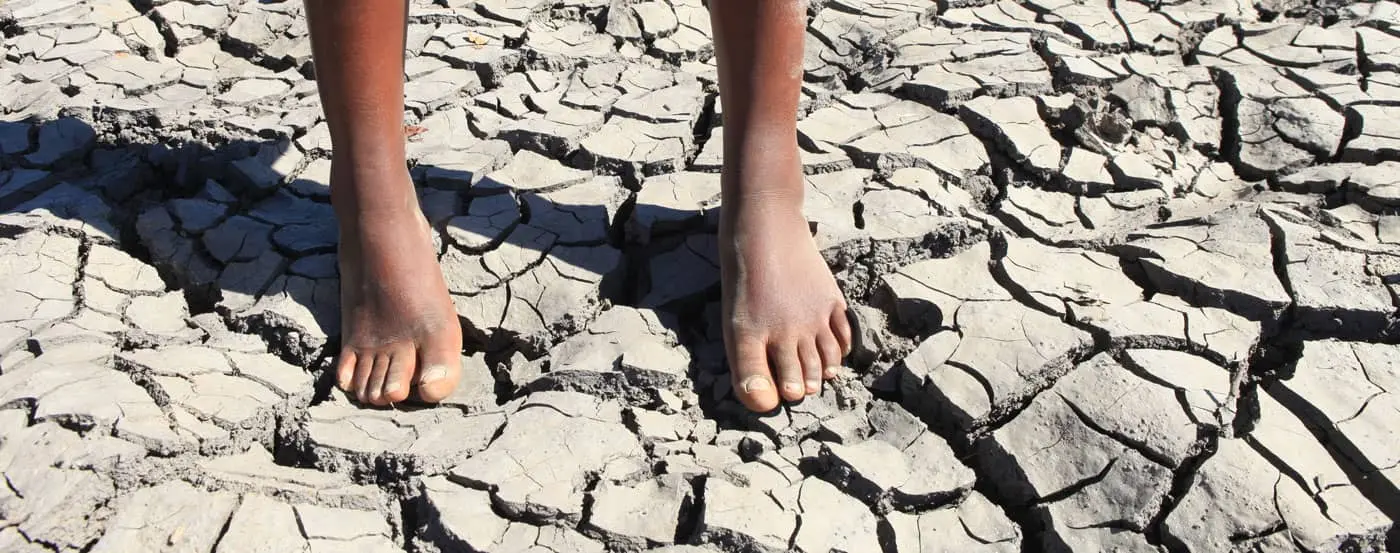
Extreme weather events and other climate-related disasters are becoming more frequent, severe and disruptive to children's lives, endangering communities, creating food insecurity, threatening water supplies and forcing children to migrate — with their families or on their own.
Flood zones are breeding grounds for deadly waterborne diseases. Droughts fuel food insecurity, heightening risks of child malnutrition. Extreme heat damages children's health, nutrition, learning and overall well-being.
The Climate Risks Report contains a detailed analysis of how climate hazards are affecting children's access to health, nutrition, water, sanitation and hygiene (WASH), education, child protection and social protection services to help governments and other partners identify where children are most at risk and take action.
Learn more: Read the 2026 Children's Climate Risks Report
Responding to climate disasters by building community resilience to future shocks
When a weather disaster strikes, UNICEF focuses on delivering immediate relief to affected children and families. Emergency response is at the core of UNICEF's mission.
'This is what the climate crisis looks like' — a look at UNICEF's response to Horn of Africa drought emergency:
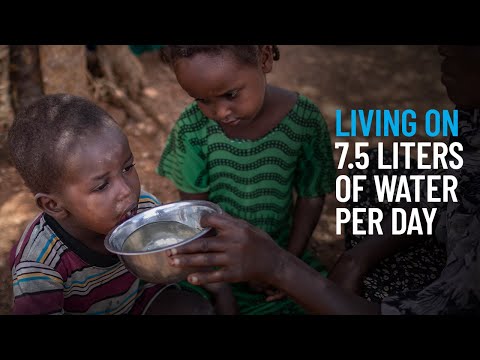
While helping to repair damaged infrastructure and otherwise support recovery, UNICEF also looks at ways to reduce disaster risks, helping communities rebuild in ways that ensure essential systems and services children rely on can better withstand future shocks.
Helping countries develop more climate-resilient services has become an increasingly important aspect of UNICEF's program work in education, health, water and sanitation and social protection.
UNICEF works closely with governments to help develop and implement disaster preparedness and risk reduction plans and helps advance innovations that support climate adaptation, such as solar-powered water pumps.
Guidance for parents and caregivers: How to talk to children about climate change
A cross-cutting issue that touches all UNICEF's major program areas
Climate change and its impacts factor into virtually everything UNICEF does for children, from ensuring access to safe water and sanitation to supporting health and nutrition to upholding every child's right to a quality education and protecting them from harm.
Because climate change affects nearly every aspect of children's lives, UNICEF integrates climate action across its programs. This includes supporting climate-resilient water systems, helping governments assess and manage climate risks and advocating for policies that protect children from environmental threats.
UNICEF seeks to address climate change and environmental degradation for and with young people, through programs for survival, health and well-being — the beating heart of UNICEF's mandate.
From eco-anxiety to eco-optimism: supporting youth climate leaders
UNICEF understands that children and young people have a key role to play in addressing the global climate crisis. UNICEF also understands that young people are determined to be agents of change — and that they are optimistic that meaningful action is possible.
As a partner in The Green Rising initiative, UNICEF is committed to providing resources and support to help youth-led efforts succeed — and to help spark a movement.
UNICEF is a strong advocate for young people to meaningfully participate in climate policy and decision-making, while also helping them identify, develop and spearhead solutions in their communities.
“Children are essential actors in responding to the climate crisis," says Gautam Narasimhan, UNICEF Senior Advisor on Climate Change, Energy and Environment. "We owe it to them to put all our efforts behind solutions we know can make a difference, such as reducing vulnerability to disasters, improving the management of water resources and ensuring that economic development does not happen at the expense of [the environment].”
Learn more about how UNICEF engages youth as part of the global climate response
UNICEF won't stop until every child has a voice. Watch the video:
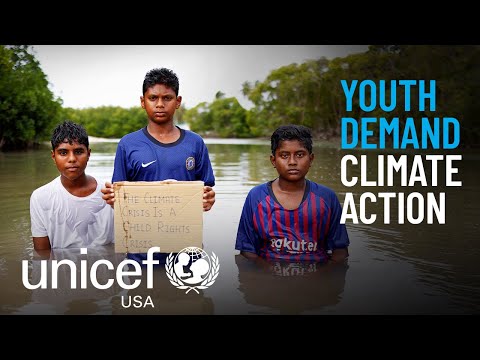
A global call for climate action centered around children and young people
Scientists warn that even if the world is able to achieve specific goals such as reducing greenhouse gas emissions, it is already too late to reverse some of the worst impacts of climate change.
Through its program and advocacy work, UNICEF supports local solutions that value biodiversity as well as nature-based solutions, and acts to protect children's health from toxic metals, chemicals, hazardous waste, air pollution and other harmful bi-products of society. UNICEF is committed to supporting solutions for clean, renewable and sustainable energy, working with both public and private sector partners to advance those solutions where they are needed the most.
Through its Healthy Environments for Healthy Children framework, UNICEF supports efforts to strengthen climate-resilient health systems, integrate climate and environmental education into schools and empower children and young people to be agents of change.
Financing climate action: UNICEF's Today & Tomorrow initiative
Countries least responsible for the climate crisis are often the ones bearing the brunt of its impacts — while receiving the least support.
UNICEF and partners are working to increase financing for climate resilience building, emergency preparedness, disaster response and risk reduction work. Learn more about the Today & Tomorrow Initiative
UNICEF won’t stop until every child is healthy, protected, educated and respected. Discover UNICEF's call to action to secure a livable, sustainable future for all